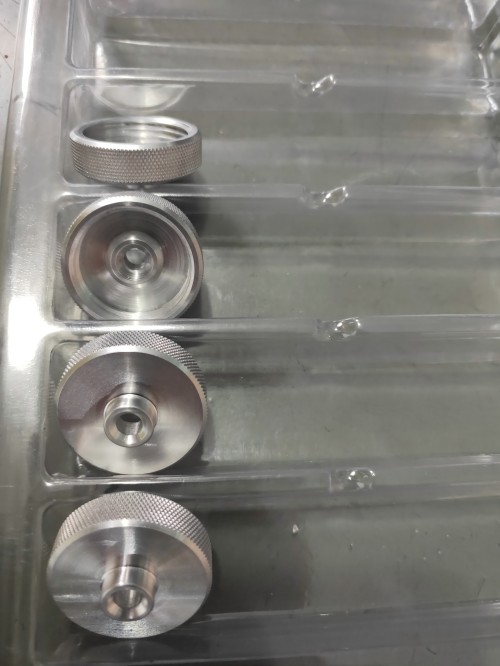
AL6061 parts with black anodized
Types of Medical Components
Surgical Instruments
These are tools used in surgeries for cutting, manipulating, or stabilizing tissue.
Examples: Forceps, scissors, scalpels, clamps, and needle holders.
Implants
Medical implants are devices or tissues that are inserted into the human body.
Examples: Orthopedic implants (e.g., hip and knee replacements), dental implants, pacemaker components, and spinal rods.
Prosthetics
Artificial devices that replace lost body parts.
Examples: Artificial limbs, prosthetic joints, hearing aids, and ocular prosthetics.
Diagnostic Devices
Components used in medical instruments to assist in diagnosing conditions.
Examples: Sensors for diagnostic equipment, probes, thermometers, and endoscope tips.
Drug Delivery Systems
Devices used to administer medication into the body.
Examples: Insulin pens, syringes, inhalers, and infusion pumps.
Medical Equipment Parts
Components that make up larger medical devices or equipment.
Examples: Patient monitoring systems, ventilators, and dialysis machine parts.
Specifications for Medical Components
1. Material Specifications
Medical components must be made from biocompatible, non-toxic materials that meet strict standards for safety and durability.
Biocompatibility: Materials must not cause adverse reactions when in contact with the body. Common biocompatible materials include:
Titanium (often used in implants for its strength, light weight, and corrosion resistance)
Stainless Steel (commonly used for surgical tools, prosthetics, and implants)
Medical-grade Plastics (e.g., PTFE, PEEK, and silicone for drug delivery devices and certain implants)
Ceramics (used in joint replacements due to their wear resistance and low friction properties)
Gold and Platinum (used in implants or diagnostic devices due to their biocompatibility and electrical conductivity)
Material Certifications:
USP Class VI: For materials that are approved for direct contact with tissues.
ISO 13485: The quality management system standard for medical device manufacturing.
FDA 21 CFR 820: Compliance with the FDA’s regulations for medical device quality management.
2. Tolerances and Dimensional Specifications
Medical components often require tight tolerances to ensure proper function, comfort, and safety. Common tolerance ranges are:
Dimensional Tolerance: Typically within ±0.01 mm to ±0.05 mm for most medical parts.
Thread Tolerance: For components that have threads, such as screws, fittings, and connectors, thread specifications often include standards such as ISO 965-1 or ANSI B1.1 for Unified Thread Standard (UTS).
Surface Finish: For implants, surgical instruments, or diagnostic tools, the surface finish should be Ra 0.2 μm to Ra 0.8 μm to minimize the risk of infection or irritation.
3. Surface Treatment and Finishing
Medical components often undergo surface treatment to ensure functionality, safety, and durability.
Passivation: Chemical treatment to remove free iron from the surface of stainless steel parts, making them more resistant to corrosion.
Anodizing: Used for titanium or aluminum parts to improve corrosion resistance and surface hardness.
Polishing: Necessary for parts that will be in contact with tissue to reduce friction and improve aesthetic appeal (e.g., implants, dental tools).
Coatings: Some medical components, like implants, may require specialized coatings, such as hydroxyapatite (for bone bonding) or gold plating (for electrical conductivity).
Sterilization Compatibility: Many medical parts must be designed to be compatible with sterilization methods, such as autoclaving, gamma radiation, or ethylene oxide sterilization.
4. Mechanical Properties
Medical components often experience stress, wear, and mechanical forces, so they must exhibit high mechanical strength and fatigue resistance.
Tensile Strength: The maximum stress a material can withstand without breaking, typically measured in MPa (megapascals).
For instance, titanium alloys may have tensile strengths upwards of 900 MPa, making them ideal for implants.
Fatigue Resistance: Medical implants or prosthetics that are subjected to repetitive loading (e.g., joint implants) must have high fatigue resistance to prevent early failure.
Impact Resistance: Some medical devices (e.g., orthopedic tools) need to withstand high-impact forces without cracking or deforming.
5. Biomechanical and Functional Specifications
For implants and prosthetics, precise design features are crucial for functionality, safety, and longevity.
Fit and Tolerances: Implants must match anatomical structures accurately (e.g., hip or knee replacements), ensuring proper alignment and minimal wear.
Load Distribution: Parts like orthopedic implants or dental components must distribute loads evenly to avoid failure.
Flexibility and Durability: In prosthetics, materials must be flexible enough for comfort while also durable enough for long-term use.
6. Regulatory and Certification Requirements
Medical components must meet regulatory standards before they can be marketed or used.
FDA Regulations: Medical devices in the U.S. must comply with FDA 21 CFR Part 820, which outlines Good Manufacturing Practices (GMP) for medical devices.
ISO 13485: The international standard for quality management systems specific to medical devices.
CE Marking: Medical devices sold in Europe must have CE marking, indicating they conform to European health, safety, and environmental protection standards.
ISO 10993: This standard outlines the biological evaluation of medical devices to ensure they are biocompatible.
7. Testing and Quality Assurance
Due to the critical nature of medical components, extensive testing is required to verify their safety and efficacy.
Functional Testing: Ensures that the part works as intended, such as checking that a prosthetic limb moves as designed or that an infusion pump delivers medication at the correct rate.
Sterility Testing: Ensures that components intended for use in sterile environments (e.g., surgical instruments) are properly sterilized before being used.
Durability Testing: Components like implants must undergo rigorous testing to simulate years of wear under normal body conditions. This can include fatigue testing and stress testing.
Compatibility Testing: Ensures that materials are compatible with other materials in the body or medical device, such as checking that materials used in implants do not cause adverse reactions with bodily fluids.
Example of Medical Component Specifications
Part Name: Orthopedic Hip Implant
Material: Titanium Alloy (Ti-6Al-4V)
Surface Finish: Ra 0.4 μm
Dimensions:
Outer diameter: 50mm ± 0.05mm
Length: 120mm ± 0.1mm
Tolerances: ±0.05mm on all features
Thread: M6x1.0 (for attachment screw)
Hardness: Rockwell C 40
Certification: FDA approved, CE Marked
Sterilization: Compatible with autoclaving
Fit: Must fit standard anatomical parameters for hip joint replacement surgery